



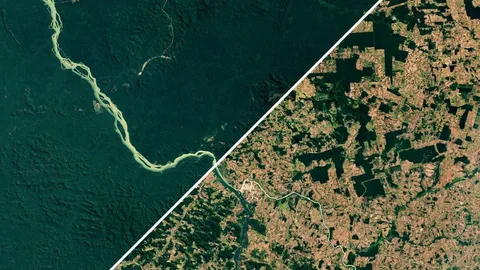
Across the world, and especially in urban centers like Bengaluru, lakes are critical ecosystems that support biodiversity, recharge groundwater, and regulate local climates. However, urbanization, pollution, and climate change have severely degraded many of these water bodies. To reverse this trend, environmentalists are turning to cutting-edge technologies like satellite imagery and machine learning (ML) to monitor and accelerate lake restoration efforts.
By analyzing satellite data over time, researchers and policymakers can gain vital insights into lake health, identify pollution sources, and evaluate restoration activities — all at a fraction of the time and cost of traditional field surveys. Behind these advances lies a growing demand for skilled professionals, making a data scientist course an attractive option for those passionate about environmental conservation through technology.
The Role of Satellite Imagery in Environmental Monitoring
Satellite imagery provides a bird’s-eye view of lakes and their surrounding ecosystems, capturing valuable information such as:
- Water Quality Indicators: Surface reflectance data can infer parameters like turbidity, algal blooms, and chlorophyll concentration.
- Shoreline Changes: Satellite data can detect encroachments, erosion, and changes in lake boundaries.
- Vegetation Analysis: Healthy aquatic and surrounding vegetation can be monitored to assess ecological balance.
- Pollution Detection: Suspended solids, oil spills, and chemical runoff leave distinct spectral signatures visible from space.
This comprehensive perspective makes satellite data an indispensable tool in environmental conservation projects, including lake restoration.
How Machine Learning Enhances Satellite Data Analysis
While satellite images provide raw information, making sense of this data requires sophisticated analytical techniques. This is where machine learning comes in. ML models can:
- Classify Land and Water Bodies: Algorithms like Support Vector Machines (SVM) or Random Forests can differentiate between water, vegetation, urban development, and barren land.
- Predict Future Changes: Time series models can forecast future trends in water levels or pollution concentrations based on historical data.
- Detect Anomalies: Unusual changes in water color or surface area can be flagged automatically, enabling rapid responses to emerging threats.
- Automate Large-Scale Monitoring: ML can process hundreds of thousands of images quickly, allowing for real-time monitoring across multiple lakes and regions.
Thanks to the convergence of satellite technology and ML, environmentalists can now intervene faster, prioritize restoration efforts, and measure the impact of their initiatives with unprecedented precision.
Challenges in Using Satellite Data for Lake Restoration
While the potential is enormous, using satellite imagery and ML for environmental monitoring isn’t without challenges:
1. Data Quality and Resolution
High-resolution satellite images are expensive and not always available for all regions. Many freely available datasets, like those from the Landsat or Sentinel missions, offer moderate resolution, which may not capture small-scale changes accurately.
2. Cloud Cover and Atmospheric Conditions
Tropical regions like Bengaluru often experience heavy cloud cover, especially during monsoons. Clouds can obscure water bodies in optical imagery, complicating continuous monitoring efforts. Techniques like radar-based imaging (Synthetic Aperture Radar) help address this issue, but require specialized processing.
3. Ground Truth Validation
Machine learning models need labelled data for training and validation. Field surveys to gather ground truth data are essential but resource-intensive. Inaccuracies in this data can reduce model performance.
4. Expertise and Tools
Extracting meaningful insights from satellite imagery requires interdisciplinary expertise in remote sensing, ML, and environmental science. Access to the right tools — such as Google Earth Engine, QGIS, and specialized Python libraries — is also crucial for successful implementation.
Success Stories in Lake Monitoring
Several initiatives across India and the world demonstrate how satellite imagery and ML are revolutionizing lake conservation:
- Bellandur and Varthur Lakes (Bengaluru): Environmental organizations have used satellite data to track pollution, encroachments, and the effectiveness of cleanup operations.
- Chilika Lake (Odisha): Restoration efforts have used remote sensing to monitor siltation patterns and aquatic vegetation recovery.
- Great Lakes (USA): High-frequency satellite data combined with AI models help predict harmful algal blooms, enabling preemptive action.
These success stories highlight the enormous potential of technology-driven environmental conservation when executed thoughtfully.
Future Opportunities in Environmental Data Science
The integration of satellite technology, ML, and environmental science is creating new career paths. Governments, NGOs, research institutes, and private tech companies are increasingly looking for data professionals who can apply analytical skills to ecological problems.
Key areas of growth include:
- Climate Change Research: Analyzing the impact of climate change on freshwater resources.
- Urban Water Management: Helping cities plan sustainable water management strategies.
- Ecological Restoration Projects: Designing and monitoring large-scale restoration initiatives.
- Policy Development Support: Providing evidence-based insights to inform environmental policies.
For individuals aspiring to work at this intersection, acquiring the right educational background is critical. Enrolling in a specialized data science course in Bangalore can offer not only the technical training in machine learning and remote sensing but also exposure to real-world environmental projects in and around the city — one of India’s leading hubs for technology and innovation.
Conclusion
The battle to restore and protect lakes is a race against time, especially in fast-growing urban centres like Bengaluru. Fortunately, the fusion of satellite imagery and machine learning is equipping conservationists with powerful new tools to fight this battle more effectively.
By turning raw satellite data into actionable insights, it’s now possible to monitor lake health continuously, predict threats before they become critical, and measure the impact of restoration efforts scientifically.
For the next generation of environmental data scientists, the opportunity to contribute meaningfully to sustainability and ecological restoration is vast. With the right skills, passion, and education, one can play a pivotal role in preserving our planet’s most vital resources for generations to come.
ExcelR – Data Science, Data Analytics Course Training in Bangalore
Address: 49, 1st Cross, 27th Main, behind Tata Motors, 1st Stage, BTM Layout, Bengaluru, Karnataka 560068
Phone: 096321 56744
