



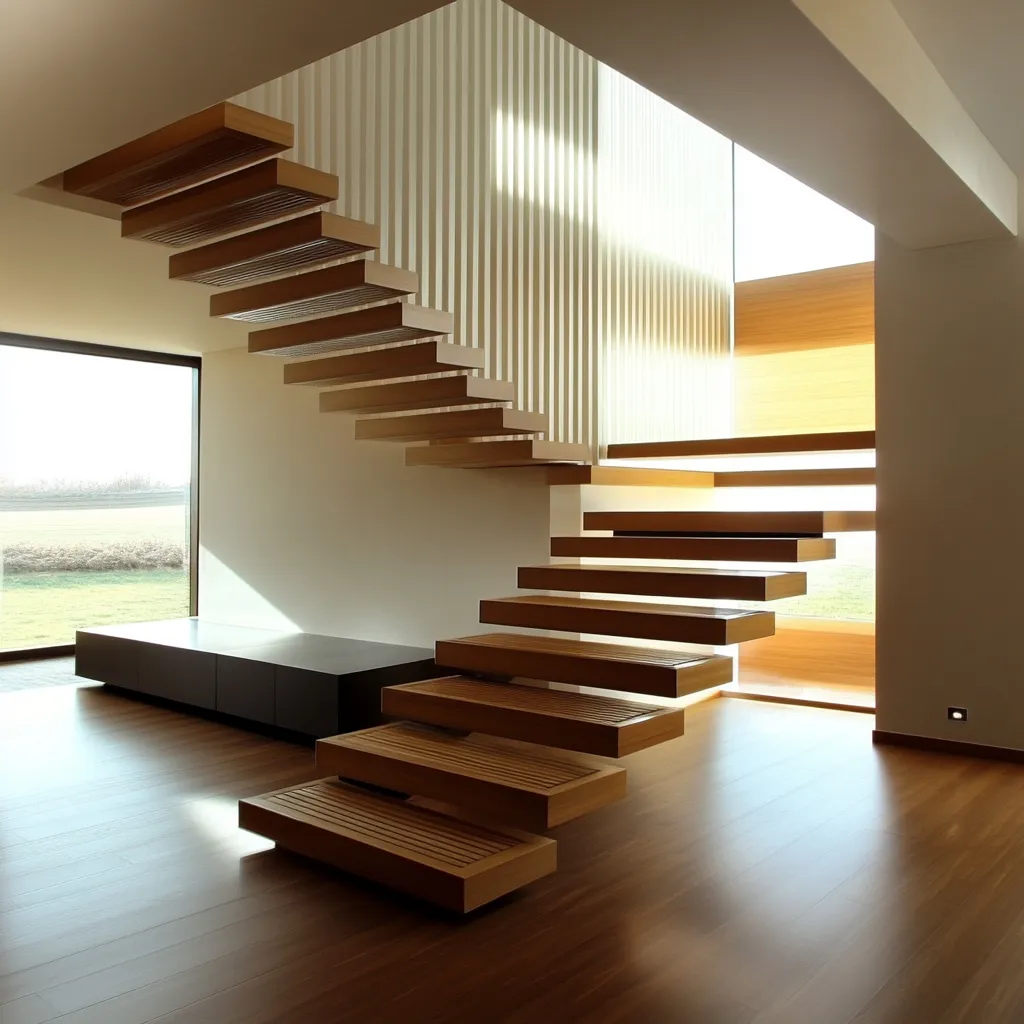
In the hierarchy of interior design, few elements command as much structural and visual authority as a well-crafted staircase. As the primary artery of the home, it bridges multiple living levels while serving as a bold statement of the owner’s aesthetic values. While modern construction often favors speed and efficiency, the resurgence of wood stairs as a preferred architectural feature highlights a collective return to materials that offer warmth, permanence, and unparalleled durability. Transitioning from standard carpeted steps to a custom hardwood system is more than a cosmetic upgrade; it is a structural investment that improves indoor air quality, enhances safety through better traction, and provides a significant boost to a property’s long-term resale value.
The Science of Species: Choosing the Right Hardwood
The longevity of a staircase is fundamentally determined by the density and grain structure of the wood chosen. Because stairs are subjected to concentrated “point-loading” with every step, the Janka Hardness Scale serves as an essential guide for selection.
- White Oak: Known for its closed-grain structure and tyloses (tiny bubble-like plugs), White Oak is exceptionally resistant to moisture and wear. Its neutral, wheat-colored palette makes it the premier choice for modern, minimalist, or “Scandi” designs.
- Hard Maple: Boasting a Janka rating of approximately 1,450, Maple is one of the hardest domestic woods available. Its smooth, uniform texture is ideal for contemporary homes where clean lines and light-reflective surfaces are a priority.
- American Walnut: For a more traditional or luxury feel, Walnut offers deep chocolate tones and a complex, swirling grain. While slightly softer than Oak, its natural oils provide excellent stability and a rich patina that deepens over time.
- Hickory: Often utilized in rustic or high-traffic commercial settings, Hickory is incredibly tough and features a dramatic, variegated color pattern that effortlessly hides the minor scuffs and dents of daily life.
Structural Integrity: Understanding Treads, Risers, and Nosings
A staircase is a complex assembly of interlocking parts, each with a specific mechanical role. The tread is the horizontal surface that bears the weight of the user. For maximum stability, professional-grade treads are typically milled to a thickness of 1-1/16″ or 1-3/4″. The riser is the vertical component that provides the “height” of the step; in modern designs, white-painted risers are often used to create a “waterfall” contrast against natural wood treads.
Crucial to safety is the stair nosing, the rounded front edge that protrudes over the riser. A properly engineered nosing provides additional surface area for the foot and a visual “lip” that prevents slipping. By sourcing precision-milled components, homeowners can ensure that every step in the flight is uniform in height and depth—a critical factor in preventing the “muscle memory” errors that lead to trips and falls.
Design Versatility: From Straight Flights to Floating Treads
The flexibility of wood as a medium allows for a wide range of architectural styles.
- Straight and L-Shaped: These are the foundations of residential design, offering simplicity and ease of navigation. They provide excellent opportunities for under-stair storage or built-in shelving.
- Open Riser (Floating): For ultra-modern interiors, open riser stairs allow light and air to pass through the structure, creating a sense of openness. These systems often utilize heavy, thick-cut treads anchored into a hidden steel stringer within the wall.
- Spiral and Curved: When space is at a premium or a grand entrance is required, curved wood stairs offer a sculptural elegance that is unmatched by metal or stone. The natural flexibility of certain hardwoods allows for the creation of sweeping, organic lines that guide the eye upward.
Maintenance and the “Health” of Hardwood
Unlike carpet, which acts as a reservoir for dust, pet dander, and allergens, hardwood stairs contribute to a cleaner indoor environment. Maintenance is remarkably straightforward: regular sweeping with a soft-bristled broom and occasional cleaning with a pH-neutral wood soap are generally sufficient. For areas of high wear, modern water-based polyurethanes provide a “commercial-grade” shield that protects the wood from UV damage and moisture without the yellowing effect associated with traditional oils. If a wood staircase does show signs of wear after decades of use, it can be sanded and refinished to a “like-new” condition—a luxury that laminate or carpeted options cannot provide.
The Investment Value of Millwork
From a real estate perspective, custom millwork is a “high-return” feature. Appraisers and potential buyers view hardwood stairs as a sign of a high-quality build. In many markets, the transition from carpet to hardwood on a staircase can yield a return on investment (ROI) that covers the cost of the materials and labor, largely because the durability of wood means the staircase will not need replacing for the life of the home.
Achieving a professional-grade staircase requires a synthesis of high-quality raw materials and expert milling. Because the geometry of a staircase must be precise to meet local building codes, sourcing components from specialized manufacturers is essential. By selecting your materials from Wood Stair Co., you are ensuring that your home’s vertical architecture is built on a foundation of American-sourced hardwoods and precision engineering. Whether you are conducting a simple carpet-to-hardwood conversion or designing a grand central staircase, the quality of your wood components will define the beauty and safety of your space for generations to come.
