



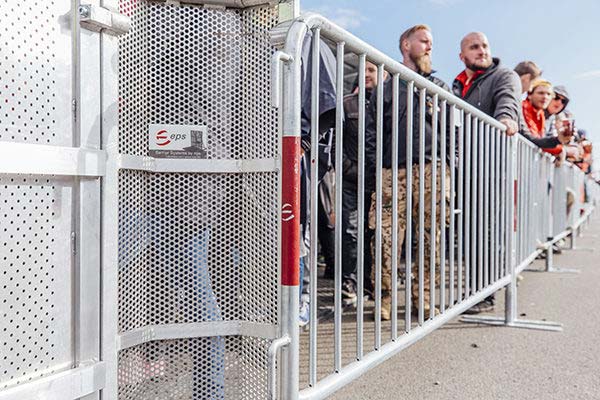
In the high-pressure world of event logistics and municipal management, the efficiency of a safety plan is often dictated by the speed of its deployment. While heavy-duty steel barriers are the industry standard for securing perimeters, the physical challenge of moving and storing hundreds of individual units can create a significant operational bottleneck. To solve this, savvy logistics managers and venue directors utilize specialized barricade racks to streamline the transport, organization, and preservation of their safety hardware. These industrial-grade carts are not merely storage solutions; they are force multipliers that allow a small crew to secure a multi-acre site in a fraction of the time required for manual handling, ensuring that public safety measures are implemented with surgical precision.
Engineering for Efficiency: The Anatomy of a Barricade Cart
A professional-grade barricade rack is designed to withstand the rigorous demands of frequent transport and heavy loads. Most high-capacity carts are engineered to hold between 25 and 30 interlocking steel barriers, which can equate to over 1,500 pounds of equipment per rack.
- Heavy-Duty Mobility: The heart of a successful rack system lies in its casters. Industrial racks feature large, non-marring polyurethane or phenolic wheels that can traverse both smooth stadium floors and uneven asphalt without faltering. High-end models include “swivel-lock” and “brake” mechanisms, allowing for precise steering during deployment and absolute stability during storage.
- Structural Durability: To match the lifespan of the galvanized steel barriers they carry, these racks are typically finished with a hot-dip galvanized or high-impact powder-coated layer. This prevents rust and structural fatigue, even when the racks are stored in outdoor depots or exposed to the humidity of coastal venues.
- Ergonomic Loading: Many modern racks are designed with “side-loading” or “vertical-stacking” configurations. This reduces the lifting height for workers, minimizing the risk of repetitive strain injuries and accelerating the pace of the setup and breakdown process.
Maximizing Storage Density and Fleet Longevity
For municipal departments and stadiums, square footage in storage facilities is at a premium. Without a dedicated racking system, individual barriers are often leaned against walls or stacked haphazardly, leading to “bent hooks” and scratched finishes.
By utilizing vertical storage racks, organizations can increase their storage density by up to 400%. This organized approach also facilitates easier inventory audits, allowing managers to quickly assess the condition of their fleet and identify units that require maintenance. Furthermore, by keeping the barriers off the ground and securely locked into a frame, racks prevent the “domino effect” accidents that can occur when free-standing barriers are accidentally disturbed in a busy warehouse.
The Role of Racks in “Rapid Response” Scenarios
For law enforcement and emergency management agencies, the ability to respond to a changing situation is paramount. Whether it is a last-minute route change for a parade or a sudden need to cordon off a hazardous area, barricade racks allow for a “mobile response unit” approach. A single truck or trailer equipped with four or five fully loaded racks can deliver over 500 linear feet of security in a single trip. This rapid deployment capability is essential for maintaining public order during dynamic protests or large-scale emergency evacuations where every minute counts.
Safety and Risk Mitigation in the Workspace
Moving heavy steel barriers manually is one of the most common sources of workplace injuries in the event industry. Pinched fingers, strained backs, and foot injuries are frequent when workers attempt to “drag” or “carry” multiple barriers over long distances.
Introducing professional racking systems into the workflow significantly mitigates these risks. Racks allow for the mechanical movement of the majority of the weight, meaning workers only have to handle the barriers for the final few feet of placement. This not only keeps the workforce healthy and productive but also reduces the liability and workers’ compensation risks for the organizing entity.
Investing in the Future of Your Venue
Ultimately, the decision to invest in a comprehensive racking system is a decision to prioritize the professionalism and safety of your operations. An organized venue is a safe venue, and the tools used behind the scenes are just as important as the barriers seen by the public. Achieving this level of logistical mastery requires equipment that has been engineered specifically for the front lines of crowd management. By sourcing your specialized storage and transport solutions from Epic Crowd Control, you ensure that your team is equipped with the most durable, efficient, and safety-conscious hardware on the market. When the goal is to manage thousands of people with seamless precision, the quality of your infrastructure is the true measure of your success.
