



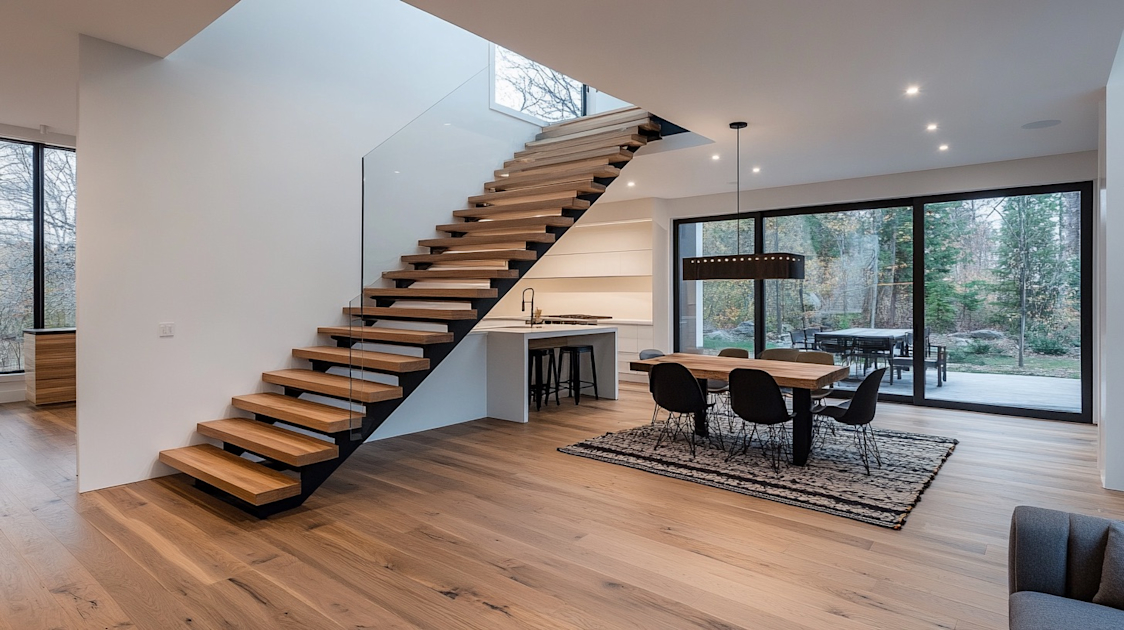
Engineering the Ascent: The Professional’s Guide to Premium Wood Stair Treads
In high-end residential architecture and commercial interior design, the staircase is far more than a utility; it is a structural centerpiece that demands a fusion of aesthetic continuity and mechanical durability. For custom homebuilders, architects, and flooring dealers, the selection of wood stair treads represents a critical decision in the project lifecycle. As the primary point of physical contact between the user and the structure, treads must withstand immense “point-load” pressure and constant abrasion while maintaining their dimensional stability. By moving away from commodity lumber toward precision-engineered hardwood components, professionals can eliminate common installation failures—such as cupping, squeaking, and finish degradation—ensuring a result that mirrors the quality of the finest hardwood furniture.
The Anatomy of Performance: Solid vs. Engineered
Understanding the internal construction of a stair tread is essential for long-term project success. While the surface may look uniform, the “bond” and “grain orientation” within the wood determine how it will react to environmental changes over time.
- Edge-Glued Stability: High-quality professional treads are typically constructed using edge-glued staves of select hardwood. This engineering technique balances the internal tensions of the wood fibers, making the tread significantly more resistant to warping or “bowing” than a single wide slab.
- The Janka Hardness Factor: Professionals prioritize species like White Oak, Hard Maple, and Hickory for their high Janka ratings. These species provide the “impact resistance” necessary to prevent the leading edge (the bullnose) from denting under the weight of heavy footwear or furniture moving.
- Moisture Content Control: Premium treads are kiln-dried to a rigorous 6–9% moisture content. This prevents the wood from shrinking after installation, which is the primary cause of the structural gaps that lead to “stair squeak.”
Integration and the “Remodel Barrier”
One of the most significant challenges for remodeling contractors is transitioning a home from carpet to hardwood. Standard structural stairs are built with 2×10 pine, which cannot simply be replaced without compromising the “rise and run” safety codes.
The Retrofit Solution (Capping)
For these projects, Retrofit Treads (also known as replacement treads) provide an elegant solution. These feature a thin-profile body (typically 5/8″ or 3/4″) that fits over the existing structural step, finished with a full-thickness 1-1/16″ bullnose. This allows the installer to achieve the look of a solid hardwood staircase without the prohibitive cost of a full structural teardown.
Prefinished vs. Site-Finished: The Efficiency Gap
In 2026, the industry has seen a massive shift toward factory-prefinished components. For the professional, the advantages are measured in both quality and time:
- Chemical Resilience: Factory finishes often utilize UV-cured aluminum oxide coatings. These are significantly harder and more scratch-resistant than the water-based or oil-based polyurethanes applied by hand on a job site.
- Color Continuity: Achieving an exact match between a pre-manufactured wide-plank floor and a raw wood tread is notoriously difficult. Sourcing prefinished treads from a trade specialist ensures that the “color story” remains consistent from the first floor to the landing.
- Zero-Odor Installation: For remodeling projects where homeowners remain in the residence, prefinished treads eliminate the health concerns and logistical delays associated with sanding dust and volatile organic compound (VOC) off-gassing.
Managing the Leading Edge: Profiles and Aesthetics
The “nosing” or bullnose of the tread defines the architectural style of the staircase. While the traditional Full Bullnose (rounded) remains a staple for traditional and colonial homes, modern designs are increasingly utilizing Square Edge or Eased Edge profiles. These sharper lines complement the “minimalist luxury” and “industrial chic” trends currently dominating the custom home market.
Securing a Professional Supply Chain
The staircase is a legacy element of any building. Its failure—whether aesthetic or structural—is highly visible and costly to repair. Success in the flooring and building trades requires a partnership with a supplier that understands the nuances of wood science and the specific demands of the installer. By sourcing premium components from Wood Stair Co, you ensure that your projects are built on a foundation of precision-milled, high-grade hardwoods. Whether you are a flooring dealer expanding your inventory or a contractor tackling a complex custom build, the right materials transform a simple transition into a lasting architectural statement.
