



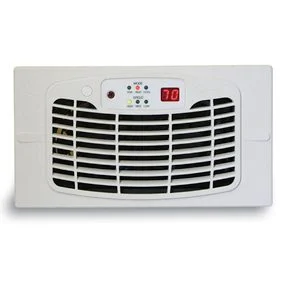
A bedroom, office, or addition can remain cold even while the central heating system is running. Distance from the furnace, heat loss, and restrictive ductwork can reduce the amount of warm air reaching that space. A heat register booster fan assists airflow at the supply vent, helping deliver more of the heated air already moving through the duct to the room where it is needed.
Why Does One Room Stay Colder Than the Others?
Uneven heating does not always mean the furnace is failing. In many homes, the uncomfortable room is at the end of a long duct branch or located above an unheated garage. Second-floor rooms, additions, and spaces with several exterior walls may also lose heat faster than interior rooms.
Other possible causes include:
- Leaking or disconnected duct joints
- Closed balancing dampers
- A dirty furnace filter
- Furniture blocking the supply register
- Poor insulation around the room
- Drafty windows or exterior doors
- Crushed or undersized duct sections
- An inadequate return-air path
A contractor should investigate these conditions before recommending a register fan. Correcting an obvious defect may restore the required airflow without additional equipment.
How Does a Register Booster Fan Work?
The fan is installed at an existing supply register. When the heating system sends warm air through the duct, the small built-in fan helps pull that air into the room. It does not create heat, raise the furnace temperature, or replace the central blower.
Some models operate manually, while temperature-sensing units can start automatically when warm air reaches the register. Automatic operation can be useful because the fan runs with the heating cycle rather than remaining on continuously.
The device is intended for a localized comfort problem. If weak airflow affects several rooms, the cause may involve the main blower, filter, return system, duct design, or furnace capacity. A qualified HVAC technician should assess broader system problems.
When Is a Booster Fan a Suitable Option?
A booster fan may be appropriate when the supply register produces warm air but the airflow is noticeably weaker than it is at other vents. It can also be helpful when major duct alterations would be difficult because the duct is concealed behind finished walls or ceilings.
Common applications include:
- A bedroom at the end of a duct run
- A home office over a garage
- A converted attic or finished basement room
- A recently remodeled room with limited airflow
- A frequently occupied space that needs additional warmth
The fan should be considered only after basic heating-system checks have been completed. It cannot correct a blocked duct, failed blower motor, malfunctioning furnace, or building-envelope problem.
Measure the Existing Register
Register fans are available in sizes intended for common vent openings. Before selecting one, remove the existing grille and measure the duct opening. Do not rely only on the outside dimensions of the grille because its face is normally larger than the opening beneath it.
The selected unit should fit securely and should not obstruct nearby doors, furniture, or curtains. Installers should also review the power-cord length and available outlet location. Extension cords should not become a permanent substitute for a safely located power source.
Useful features to consider include multiple fan speeds, temperature-based controls, readable settings, and removable surfaces for cleaning. A lower speed may be sufficient for a small room, while a more distant room may need a higher setting.
Check the Return-Air Path
Warm air must be able to enter the room, but existing room air must also have a way to leave. A bedroom may receive less supply airflow when its door is closed and there is no dedicated return vent or clear path back to the central return.
Contractors can compare airflow with the door open and closed. A large difference may indicate a return-air restriction. Depending on the home and local requirements, possible corrections may include a larger door undercut, transfer grille, jump duct, or dedicated return.
Addressing the return path can support better air circulation and prevent pressure differences between rooms.
Set Up and Test the Fan
After installation, run the heating system through several normal cycles. Start with a lower fan setting and increase it only if the room still receives insufficient airflow. The highest speed is not always necessary and may produce more sound than the occupant prefers.
Record the room temperature before installation and check it again under similar outdoor conditions. Readings should be taken in a consistent location away from the register, exterior wall, and direct sunlight.
Allow enough time to judge performance. Room temperature depends on the heating cycle, thermostat location, insulation, outdoor weather, and internal heat sources. A single reading immediately after installation may not show the full result.
Maintain the Unit During Heating Season
Dust can collect on the grille and fan blades, restricting airflow and increasing operating noise. Disconnect power before cleaning and follow the product instructions. The furnace filter and register area should also be checked regularly.
If airflow suddenly decreases or the room becomes cold again, inspect the heating system instead of assuming the register fan has failed. A clogged filter, closed damper, duct leak, or furnace issue may have developed.
A properly selected register fan can provide a practical answer when one room receives too little warm air. Visit Suncourts to explore register airflow products and find a suitable option for your home, renovation, inspection recommendation, or upcoming HVAC installation.
